When emergencies grow and resources do NOT
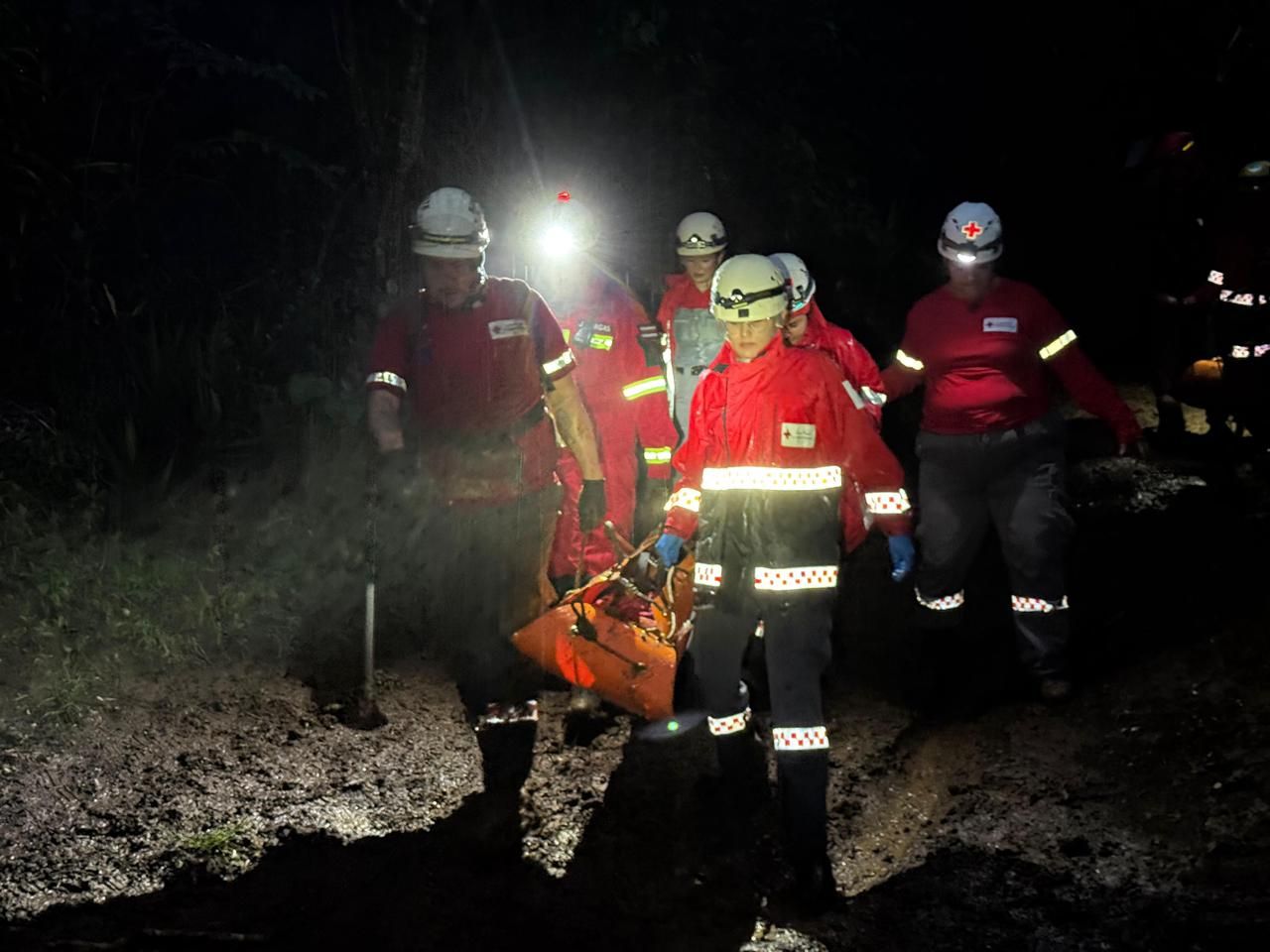
What happens when crises exceed available resources? We explore the current operational challenges of the Red Cross and our response strategies.
The humanitarian challenge of the Red Cross in 2025
January 5, 2026. The Benemérita Costa Rican Red Cross assisted more than 500,000 people during 2025, in a year marked by a sustained increase in violence, accidents, and the complexity of emergencies, within a context of limited resources and one of the greatest financial crises the institution has faced in recent years.
Each figure represents a life, a family, and a critical situation in which Red Cross teams were present to provide timely care, alleviate human suffering, and, in many cases, save lives.
Increase in violence and traumatic emergencies
During 2025, responses to fights, gunshot wounds, and stab wounds recorded a significant increase, rising from 12,976 cases in 2024 to 14,652 in 2025, a growth of 13%, reflecting a context of increased violence and risk for the population and our Red Cross members.
Traumatic emergencies also increased, rising from 225 to 281 cases, while transports in critical condition increased from 9,841 to 11,672, reflecting not only more incidents but increasingly complex situations that require greater technical capacity, time, and resources.
Regarding violent deaths associated with firearms and bladed weapons, the figure rose from 547 in 2024 to 574 in 2025. In total, the country recorded 1,850 violent deaths, compared to 1,682 the previous year, confirming an upward trend that directly impacts emergency services.
Traffic and water-related accidents
Traffic accidents continued to rise, increasing from 59,061 to 61,808 responses, a growth of 4.7%, while road fatalities increased from 487 to 550 deaths.
In water-related accidents, although responses increased from 894 to 929, a positive result was achieved in reducing fatalities, decreasing from 143 deaths in 2024 to 128 in 2025, a figure that stands out as a result of prevention, monitoring, and timely response actions.
Rain-related emergencies
During 2025, the Costa Rican Red Cross responded to 5,819 emergencies associated with rainfall, addressing floods, landslides, and other impacts in different regions of the country, with a constant deployment of personnel and resources to protect the lives and safety of communities.
Search and rescue
Missing persons in mountain areas decreased, going from 140 cases in 2024 to 126 in 2025, a reduction associated with prevention campaigns and greater public awareness.
The San José region continues to register the highest number of responses, followed by Alajuela and Heredia, concentrating a significant portion of the institution’s operational demand.
Response in Indigenous territories
During 2025, the Costa Rican Red Cross responded to 15,487 emergencies in Indigenous territories, where geographic conditions, limited access, and extended response times represent a high operational and logistical burden.
Retention of stretchers in medical centers
One of the challenges that directly impacted response capacity during 2025 was the retention of stretchers in medical centers, reaching a total of 16,299 hours of immobilized ambulances.
Each hour that an ambulance remains without a stretcher represents one less resource available to respond to emergencies in communities, affecting both the institution and the population that requires timely care to save lives.
False calls to 9-1-1
During 2025, the Costa Rican Red Cross was mobilized on 3,517 occasions due to false calls to the 9-1-1 emergency system, generating an approximate cost of 160 million colones.
Each false call implies the unnecessary deployment of personnel, ambulances, and equipment that could be responding to a real emergency. The institution makes a strong call to the population to use emergency services responsibly.
Humanitarian programs and institutional strengthening
The different programs of the Costa Rican Red Cross made it possible to expand care and support for vulnerable populations:
The older adults program currently has 314 active volunteers.
The youth program exceeds 1,000 volunteers nationwide.
Family contact restoration helped 669 people.
The institution currently has 5,617 volunteers nationwide and 1,360 salaried staff; in the case of volunteer contributions, the economic equivalent exceeds 12 billion colones.
End-of-year and New Year operation
The Costa Rican Red Cross maintains its end-of-year and New Year operation active, with reinforcements on roads, beaches, and high-traffic areas, during which more than 570 people have already been assisted.
Financial crisis and sustainability
During 2025, the Costa Rican Red Cross faced one of the greatest financial crises in its history, in a context where the number and complexity of emergencies continue to increase, while available resources remain practically the same.
On a preliminary basis and subject to final accounting closures, the institution closed the year with an approximate deficit of 1.4 billion colones. This figure may vary once the corresponding accounting processes are completed; however, it clearly reflects the financial pressure under which the Costa Rican Red Cross currently operates.
This situation directly impacts the sustainability of operations, especially in the 66 auxiliary committees that currently operate at a deficit, where income is not sufficient to cover the operational costs necessary to maintain emergency services in their communities.
Despite operational, social, and financial challenges, the Benemérita Costa Rican Red Cross reaffirms its commitment to mitigating human suffering in all its forms, with coverage, quality, transparency, and a permanent presence alongside those who need it most.